





Sales & Service Teams now available 7 days a week!

Blog

1964-1/2 Mustang

A world record holder 6 cylinder Mustang takes on all comers!

The Scrapper ā€œprogramā€ began in the late ’60s on a farm in central Saskatchewan, Canada. While most racers of the day were building V8s, Norm Hess was busy stuffing a highly modified Ford 300 inline six in an early sixties Falcon. He raced the car at the local NHRA track - SIR (Saskatoon International Raceway). The car was known as ā€œScrapperā€ and raced in the H/MP class. The class was an NHRA sanctioned class for six cylinder cars back in the day.
Read more

1968 Ford XL GT

Mark Gazzola of Vancouver, British Columbia, has one unique ’68 Ford XL!

Back in ’75 I was an impressionable youth. I was still in high school and was in the market for a set of wheels. At that time I hadn’t been totally bitten by the Ford bug, although I did tend to lean that way. I was still pretty open minded as to what type of car I might be interested in.
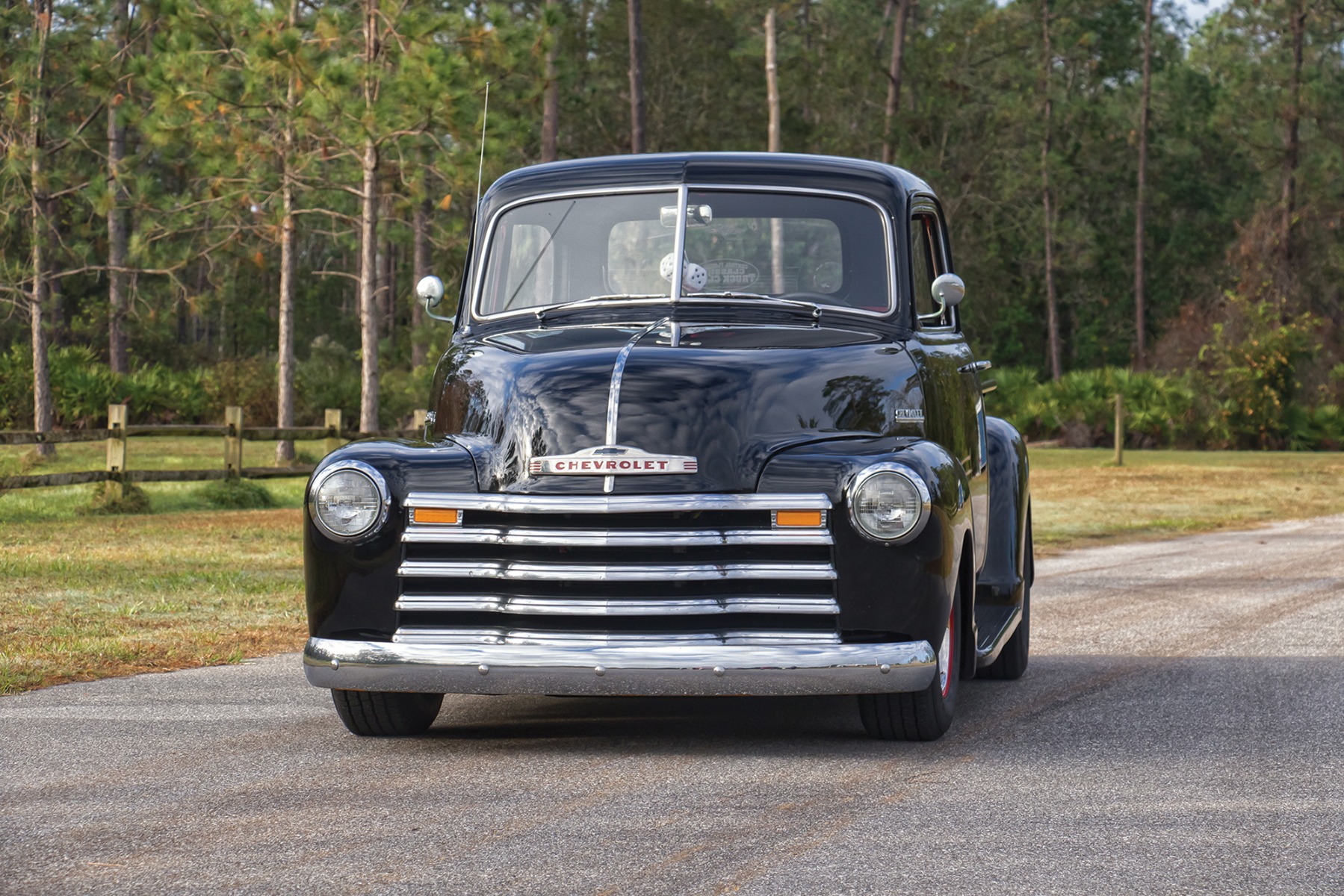

I told my boss I wanted to buy a car, and he told me his brother owned a used car lot on West Broadway and that he would probably give me a discount. He asked what type of car that I was interested in, so I told him maybe a Chevelle, Charger, or an XL. It just so happened that he had all three. The Chevelle was a ’69 light blue 396 SS Convertible with a light blue top. The Charger was a ’69 R/T 440 Magnum. Then of course there was the ’68 XL. They wanted $3600 for the Chevelle, which was way out of my league, and $2000 for the Charger. The only problem with the Mopar was when you opened the doors, you saw the front wheels, and when you opened the trunk, you saw the road. Not a good choice if you wanted a decent car. Then there was the XL. They originally wanted $2800 for it, but since I worked for the owner’s brother, they sold it to me for $1500. He wrote on the bill of sale, ā€œNo warranty expressed or implied due to price consideration.ā€ I had to get my Dad to co-sign for me, and since he already owned a ’68 LTD that he had factory ordered, it wasn’t hard to convince him.

Read more

1967 Mercury Comet

There’s a lot more than meets the eye with this ’67 Comet 202!

The Mercury Division of Ford Motor Company long utilized a stylized Mercury (the winged messenger of the gods in Greek mythology) as its symbol, and when the auto maker returned to the production of high performance cars in the early 1960s, they saw to it that their message was delivered, and fast!

Beginning with the 406 cubic-inch, 405 horsepower FE series V8 in 1962 right up to the 375 horsepower 429 Super Cobra Jet 385 series engines of the early 1970s, Mercury went toe to toe with the best Detroit had to offer both on the track and on the street. Often however, giving up a weight advantage to the competition in order to offer a more upscale vehicle to the discerning buyer. Mercury shared its high performance engine line with Ford, and though the production of Mercury muscle cars would never rival that of their Blue Oval cousins, the Division’s racing accomplishments, particularly on the drag strip in the mid 1960s, were unrivaled. Unknown at the time was how the scarcity of Mercury muscle cars would impact the collector car hobby in years to come

Read more

Featured Powerplant: Y-Block

Looking at these pictures of the cutaway display of the Y-Block Ford engine, some of the attributes that make this particular engine family unique are prominently displayed. These include the over and under stacked intake ports, shaft mounted rocker arms, fully counter-weighted crankshafts, and priority main bearing oiling. By knowing just a little about the manufacturing variances that occurred during the years this engine was in production (1954-1964), it becomes evident that the displayed engine is not a specific engine that’s been cut apart, but an assorted collection of Y parts from different years in which to make the display possible. Here’s how I came to that conclusion...

Read more

Featured Powerplant: 427 SOHC Cammer

Back in 1965, Ford's official line on the development of this engine was that they wanted to combine the technology of their proven cylinder heads from the 255 cid, dual overhead cam, Windsor-derived "Indy" engine, with the bullet-proof short block and cubic-inches of the 7000 rpm 427 "high riser" FE. An exercise in engineering to show what Ford could do with conventional and future engine technologies.

The real bottom line: Ford was getting beat up at the race track; both drag and NASCAR, by the newly introduced Chrysler 426 "Hemi". The boys over in Highland Park had done their homework developing and building the "Hemi" into a production/race engine, and were decimating the ranks of the Ford powered racers by winning almost everything they set their sights on. And in the age of "Total Performance" declared by Henry the Second in 1963, this had to be stopped. It was proclaimed that Ford Motor Company would build the stoutest of the stout, the baddest of the bad, engine anyone had ever laid eyes on

Read more

Brake Plumbing

A disc brake upgrade and dual master cylinder upgrade are some of the most common discussions amongst Ford owners. The most misunderstood ingredient of these swaps is distributing the brake fluid out to each wheel. When upgrading the brake system, it can be extremely dangerous to distribute brake fluid incorrectly. Correctly matching the master cylinder and distribution block to the braking system is very important.
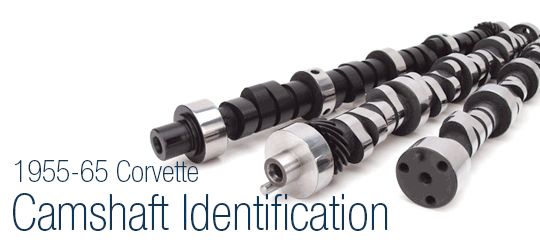
When upgrading the brakes on a classic Ford, be sure to study how the system should be installed correctly. When buying new components, be sure they come from a reputable supplier and purchase a complete system, not just components. If upgrading by using later model Ford components, get the whole system from the donor vehicle.

Read more

Rear Disc Brakes Tip

While many folks are content with slapping on a new set of front discs, very few people take the time to do it right and upgrade the rear as well. There’s a host of reasons to pitch out those old shoes and slap on a set of rotors, the obvious one being vastly superior braking advantages. Control is another one. Most older cars are nose heavy to say the least. Traveling 60 mph in a 4000 lb. vehicle and dropping the anchor on a car that’s front-only disc brake equipped can bring about some scary end swapping. A quality set of rear discs can keep the rear end at bay and greatly reduce stopping distances. Add not having the hassle of replacing worn shoes, and the conversion route is starting to look pretty worthwhile.

Read more

Coolant & Water Pump Tip

When installing a new water pump, or after flushing out your system, never reuse old coolant. Over time it can chemically break down and actually harm and attack the internals of your cooling system.

Also – Old gasket removal is critical to obtaining a good, leak-free seal. Using a putty knife, lightly scrape the water pump mounting surface until the bare metal of the block is clean.

Read more

Search engine powered by ElasticSuite